Spring Flooding in Maine: More Than Just Mud Season
Written By: Brianna Guy

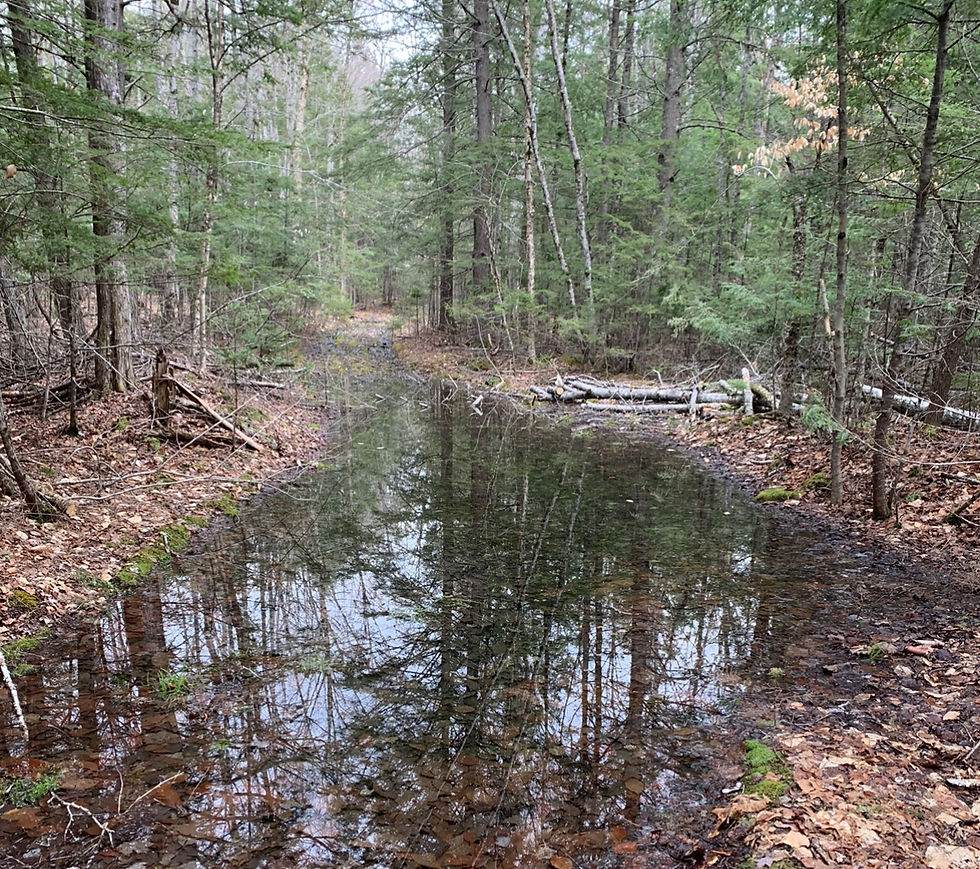
If you’ve spent any time outdoors in Maine during the spring, you’ve probably experienced “mud season” with washed-out trails, soggy ground, and rising waters that sometimes make favorite spots temporarily inaccessible. At Hirundo Wildlife Refuge, spring flooding can even cover sections of trail. While it can be frustrating, this seasonal flooding is actually a vital part of the natural world.
So why does spring flooding happen here? It’s a combination of melting snow, heavy spring rains, and frozen ground that prevents water from soaking in. All that excess water flows into rivers, streams, and low-lying areas, spilling out across floodplains and wetlands. While it may seem like a nuisance, this process plays an essential role in keeping ecosystems healthy!
As floodwaters spread, they carry nutrients from decaying plant material and deposit them across the landscape. Seasonal flooding also creates critical habitat for wildlife and other plants. This natural fertilization helps plants like ferns and shrubs as they utilize the nutrient rich soil after floods end, while fish like alewife use high water levels to migrate upstream.
Floodplains themselves are uniquely adapted to these conditions.
Along the Pushaw Stream at Hirundo you can find silver maple floodplain forests. The silver maple trees in these unique habitats are highly adapted to withstand long periods of flooding, conditions that would stress or kill other species. Silver maples can grow in more upland areas but are pretty intolerant of competition from other species, so being able to live in areas others can’t is essential to their lifestyle.
Wildlife definitely takes advantage of silver maple floodplains and spring flooding in general. Animals like beaver use higher water levels to more easily move the trees and branches they cut down for their lodges and dams. If you have ever picked up someone else while swimming in a pool or lake you know how much easier it is to lift weight when it is in the water! These habitats actually support a wide variety of species throughout the year, not just in spring. As the floods recede pools of water, called vernal pools, can be left behind that frogs and salamanders will utilize for egg laying. These ephemeral pools lack large aquatic predators like fish that would otherwise decimate these egg masses. A species of special concern, wood turtles, which are semi terrestrial, use the forests at this time to forage on plants and some of those egg masses.
So yes, spring flooding may block a trail or cause us to have to close roads to some of our favorite places. But it’s also a reminder that these landscapes are alive and constantly changing!
If you visit Hirundo this spring, you might see floodwaters in action. Some trails may be temporarily underwater, but there are still plenty of places to explore, and the scenery is worth it. And if you can’t make it to Hirundo, take some time to visit a local stream or river and experience Maine’s roaring spring waters for yourself. While you are there keep an eye out for the plants and animals that use these spaces.
References:
FCAL article: Schmitz, G. (2025, March 27). How spring can affect our land and water. Forest County Association of Lakes.
PDF (Maine Natural Areas Program): Maine Natural Areas Program. (n.d.). Silver maple floodplain forest [PDF]. Maine Department of Agriculture, Conservation and Forestry.
Webpage (same organization):
Maine Natural Areas Program. (n.d.). Silver maple floodplain forest. Maine Department of Agriculture, Conservation and Forestry.

Comments